First Boer War
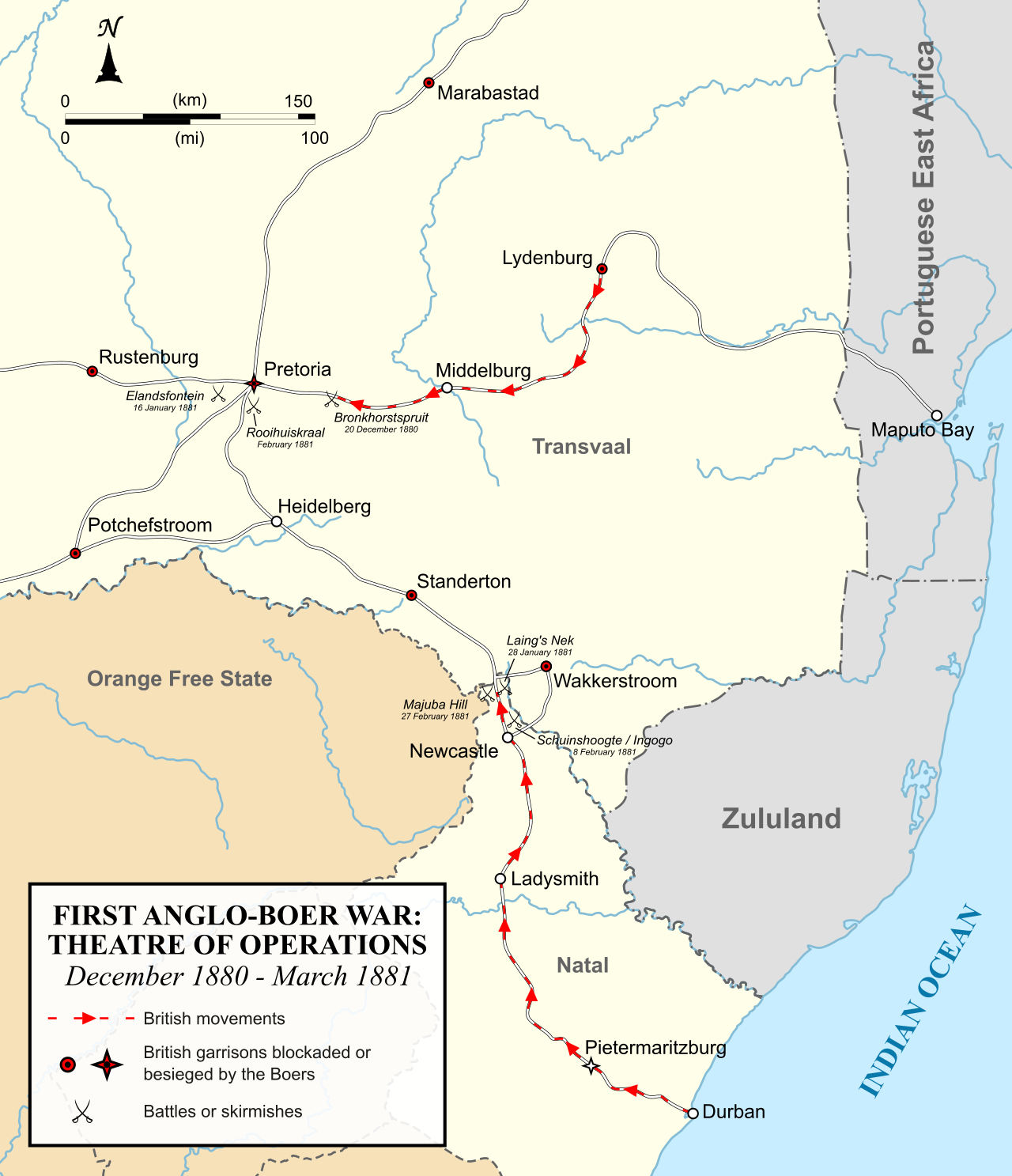
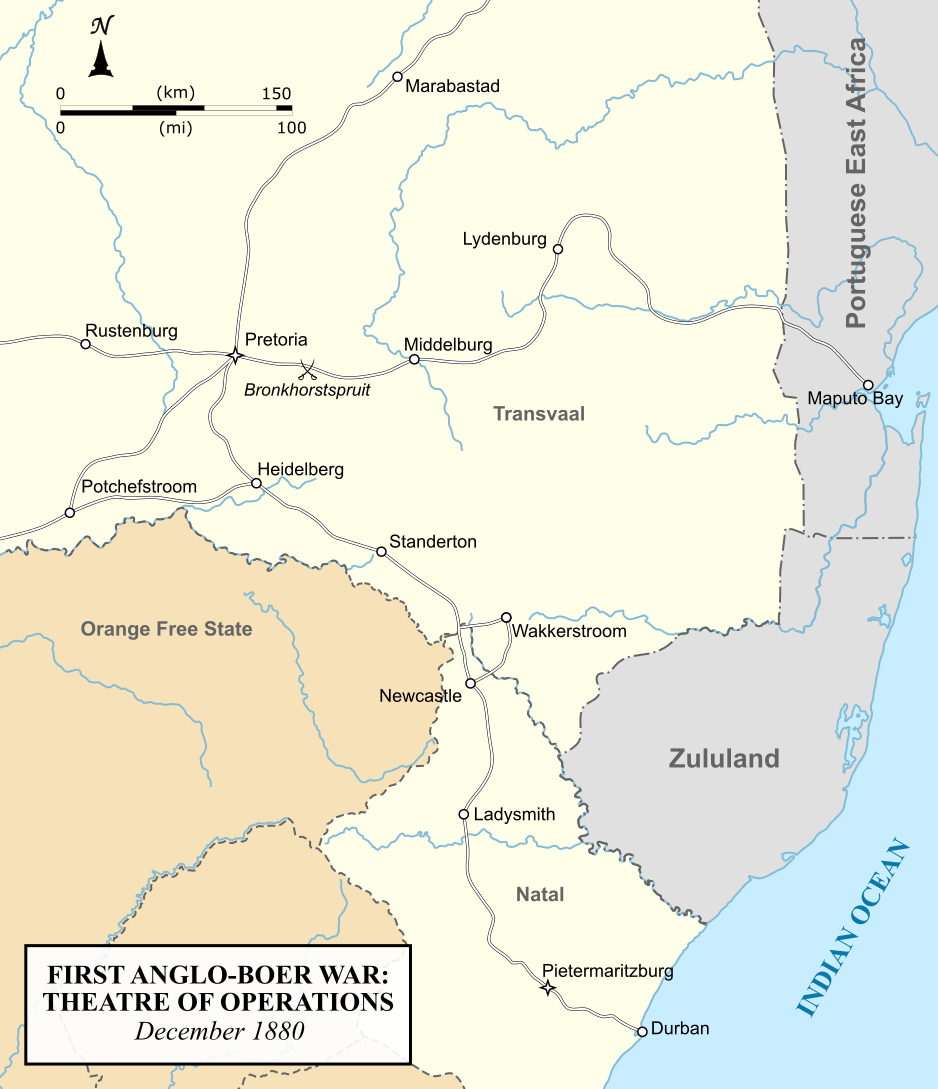
A brief conflict resulting in Boer victory and restored self-government for the Transvaal under British suzerainty.

Harrias · CC BY-SA 4.0
Lore & Background
The war's immediate trigger was a tax dispute: a Boer named Piet Bezuidenhout refused to pay an illegally inflated tax, and when officials seized his wagon, armed Boers disrupted the auction and reclaimed it.
Reader's Guide
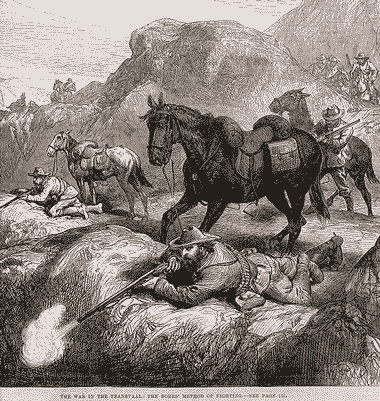
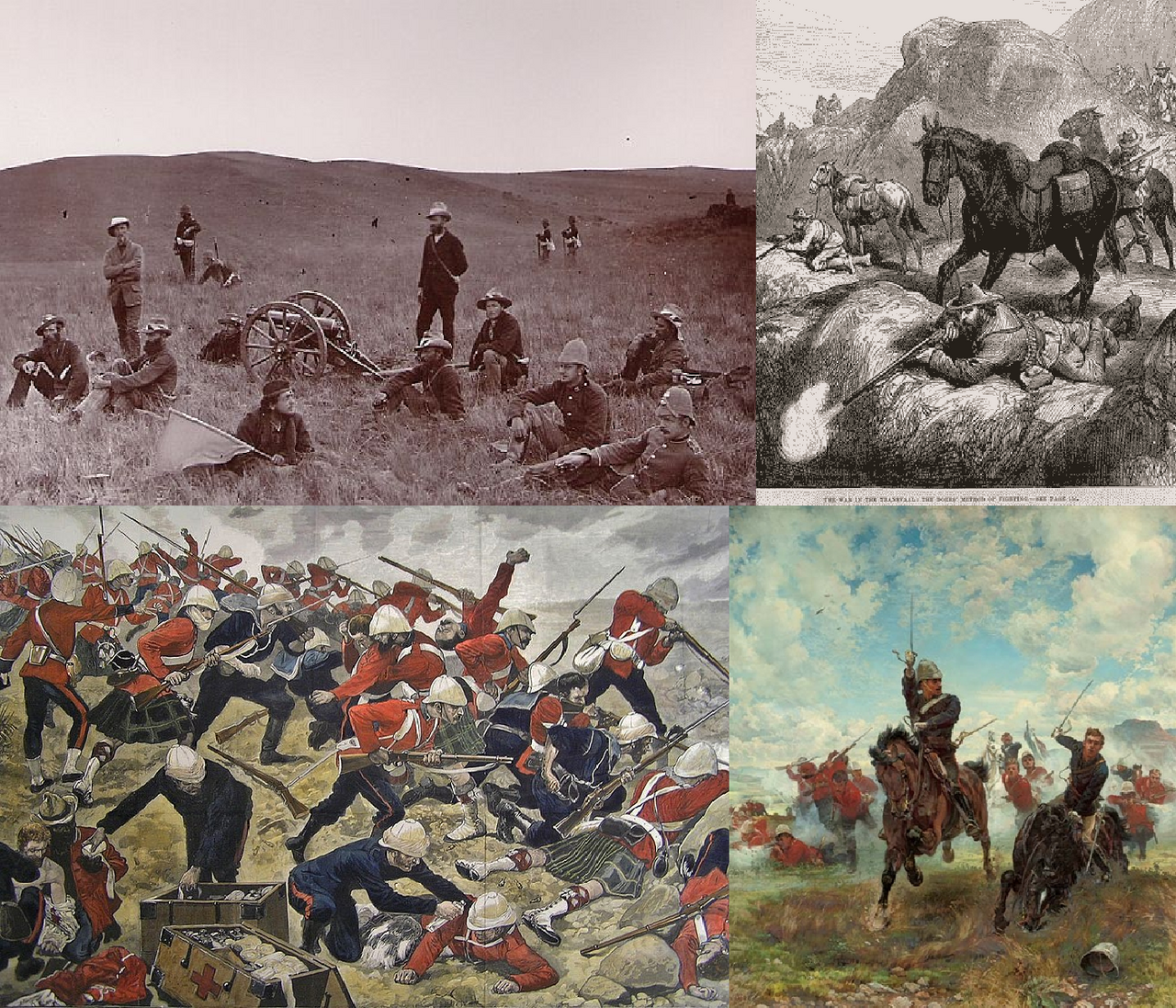
The war demonstrated the effectiveness of Boer guerrilla tactics and highlighted British underestimation of Boer resolve. Although the engagements were relatively minor in scale, the outcome restored independence to the South African Republic and set the stage for future tensions that would culminate in the Second Boer War. The war also underscored the failure of British attempts at confederation in southern Africa.
Did You Know?
- The war is also called the Transvaal War or the Transvaal Rebellion.
- The Boers had no regular army; all men in a district could be called up when danger threatened.
The Diamond Rush and Imperial Ambition
What had been a quiet agricultural hinterland suddenly became the focus of global attention. A diamond rush drew prospectors and settlers from across the world, and Kimberley swelled to a population of fifty thousand within just five years. This economic transformation pulled the region firmly into the orbit of British imperial interests. During the 1870s, Britain moved to annex Griqualand West, the territory where the Kimberley deposits had been found. For the Boer republics, this and other successive British annexations created a growing atmosphere of anxiety and distrust. The diamond discovery had fundamentally altered the strategic calculus: the interior was no longer a remote backwater but a zone of enormous economic value that London could no longer afford to ignore. The Boers, who had previously lived in relative seclusion beyond the Vaal River, now found themselves surrounded by expanding colonial claims and competing imperial ambitions.
The Annexation of 1877
By the mid-1870s, the Transvaal Republic was in dire straits. President T. F. Burgers presided over a government plagued by tax-collection failures and an ongoing military conflict with the Pedi under Sekhukhune in the northeast, while the Zulu posed an additional threat. Financially bankrupt and militarily vulnerable, the republic became an easy target for British ambitions. Lord Carnarvon, the Secretary of State for the Colonies, viewed annexation as the opening move toward a broader confederation of British and Boer territories under London's authority. He dispatched Sir Theophilus Shepstone as a special commissioner, who initially concealed his true purpose. Burgers urged the Transvaal government to respond with greater urgency, but the Volksraad failed to grasp the gravity of the situation. A delegation including Paul Kruger traveled to London to appeal to Carnarvon, but their petition was rejected. The Volksraad then counseled its citizens to avoid violent acts that might damage the Transvaal's reputation in Britain.
The Conflict and Boer Triumph
Known by several names—the First Boer War, the Transvaal War, the First Anglo-Boer War, the Transvaal Rebellion, and in Afrikaans the Eerste Vryheidsoorlog, or First Freedom War—this conflict pitted the full weight of the British Empire against the farmers of a small, recently annexed territory. The outcome was a decisive Boer victory. The speed and completeness of the Boer success demonstrated that even a major imperial power could be defeated by a determined, well-organized local force in its own terrain. The war thus represented the culmination of decades of accumulated grievance over sovereignty and self-governance.
A Continent of Competing Claims
The First Boer War did not occur in a vacuum of isolated bilateral conflict; it was one thread in a vast tapestry of imperial competition across southern Africa. The driving forces behind this expansion were multiple: securing trade routes to India via the Cape of Good Hope, exploiting the diamond fields, and racing other European powers to claim territory first.
Gallery
Frequently Asked Questions
Who won the First Boer War?
The Boers of the Transvaal emerged victorious over the British forces. This win allowed the South African Republic to restore its self-government, though it initially remained under British suzerainty.
More in Military Conflicts And Wars 1-18
Spotted an error? Know more?
This is a living reference — every entry is fact-audited, and reader corrections feed straight into our audit queue. Suggest an edit · See this site's audit record