First Chechen War

Metallist-99 · CC BY-SA 3.0
The conflict resulted in massive civilian casualties and displacement, and it highlighted the fragility of post-Soviet federal relations.
- belligerents
- Chechen Republic of Ichkeria vs. Russian Federation
- chechen_leader
- Dzhokhar Dudayev
- russian_leader
- Boris Yeltsin
Lore & Background
However, Russian efforts to control the lowlands and mountains were met with fierce resistance and surprise raids by Chechen guerrillas.
Reader's Guide
The First Chechen War was a pivotal conflict in the post-Soviet era, demonstrating the challenges of Russian federalism and the violent consequences of unresolved autonomy demands. It also exposed the limits of Russian military power against determined guerrilla tactics.
Deep Roots of Defiance
Yet many had fought loyally against the Nazis, some earning the highest Soviet military honors. Chechnya and Tatarstan refused to sign.
A War That Would Not End
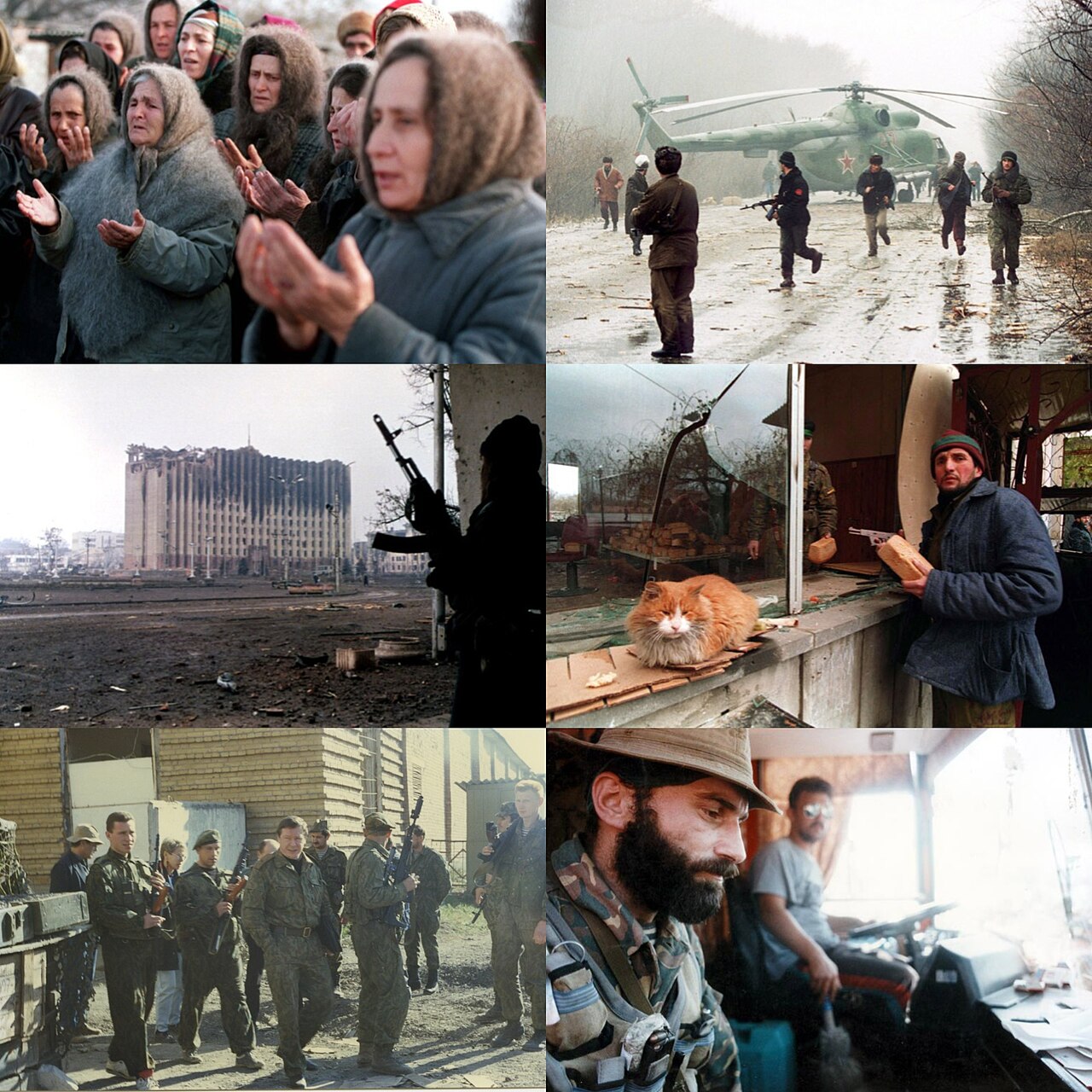
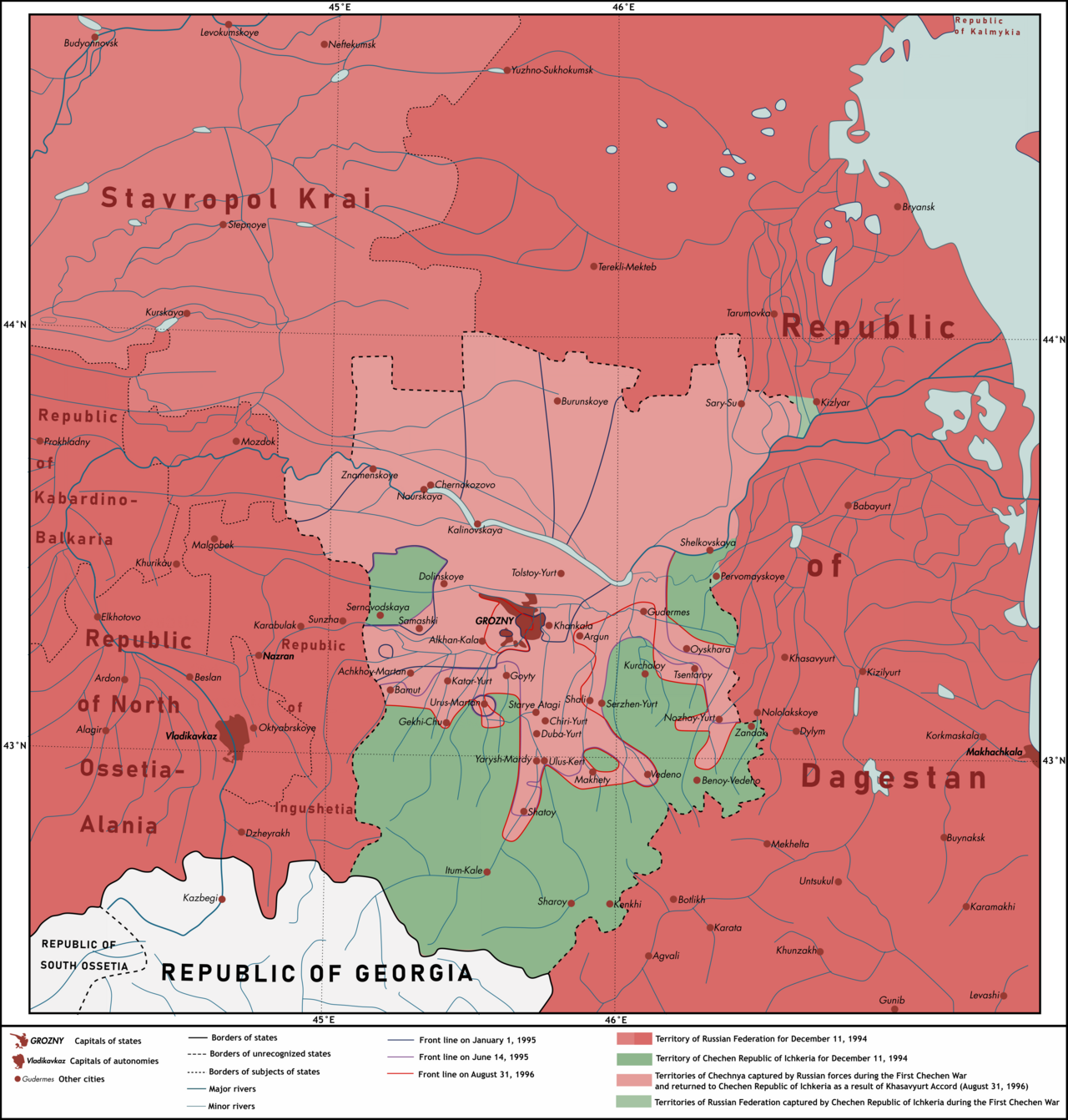
The campaign descended quickly into brutal aerial bombardment and street-level combat in Grozny. Across the lowlands and mountainous interior, Chechen guerrillas maintained a relentless campaign of surprise raids that prevented Moscow from consolidating control over the territory. Yet the conflict refused to close. In August of that same year, separatist fighters retook Grozny, a blow that shattered remaining Russian momentum. The recapture of the capital forced the hand of both sides and led directly to the Khasavyurt Accord, which halted active fighting. The peace, however, proved fragile.
A Devastation Beyond Counting
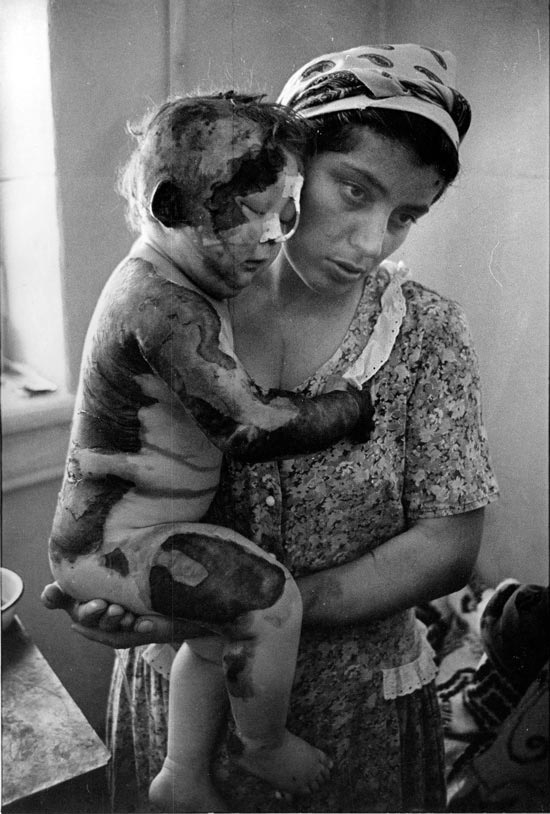
The human toll of the First Chechen War defies simple accounting, with figures varying widely depending on the source. Entire cities and towns across Chechnya were reduced to rubble, leaving a landscape of destruction that would take generations to rebuild. The sheer scale of suffering—spanning combatants on both sides and an entire civilian population—made this one of the most devastating conflicts on European soil in the post-Soviet era.
The Unresolved Question
The First Chechen War ended not with a clear victor but with a negotiated withdrawal. Russian forces pulled out of Chechen territory, and the Chechen Republic of Ichkeria retained a degree of de facto independence. Yet the underlying political crisis remained unresolved. The peace that followed was a pause, not a settlement. The first conflict thus stands as a cautionary chapter: a war fought over sovereignty, autonomy, and the post-Soviet order, whose resolution was merely deferred rather than achieved, and whose legacy of destruction and displacement shaped Chechen and Russian politics for decades to come.
Gallery
Frequently Asked Questions
What are First Chechen War's powers/role?
The conflict functioned as a major stress test for Russia's ability to retain control over its constituent republics after the Soviet Union dissolved. It involved large-scale military operations, widespread civilian displacement, and exposed deep structural tensions within the post-Soviet federal system.
More in Military Conflicts And Wars 1-18
Spotted an error? Know more?
This is a living reference — every entry is fact-audited, and reader corrections feed straight into our audit queue. Suggest an edit · See this site's audit record