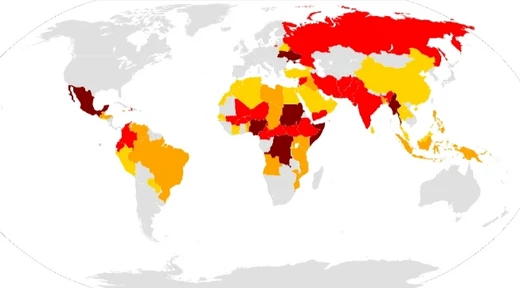
First Liberian Civil War

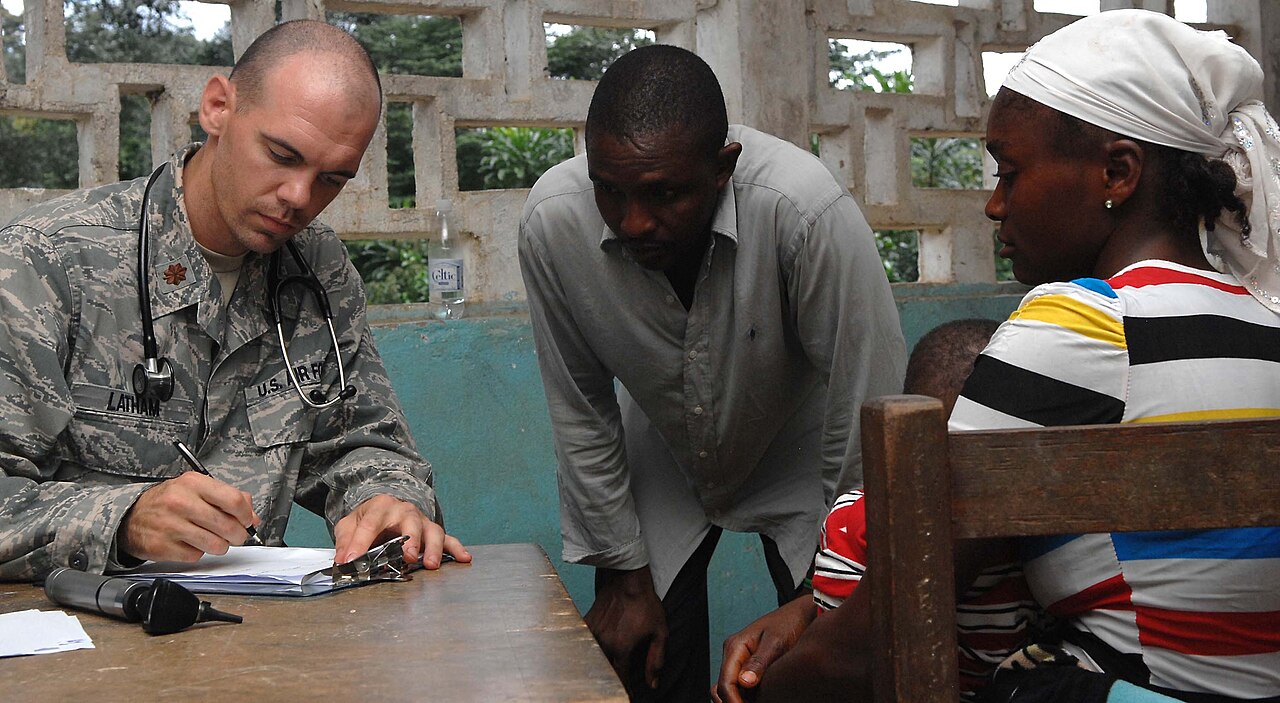
Master Sgt. Brian Bahret · Public domain
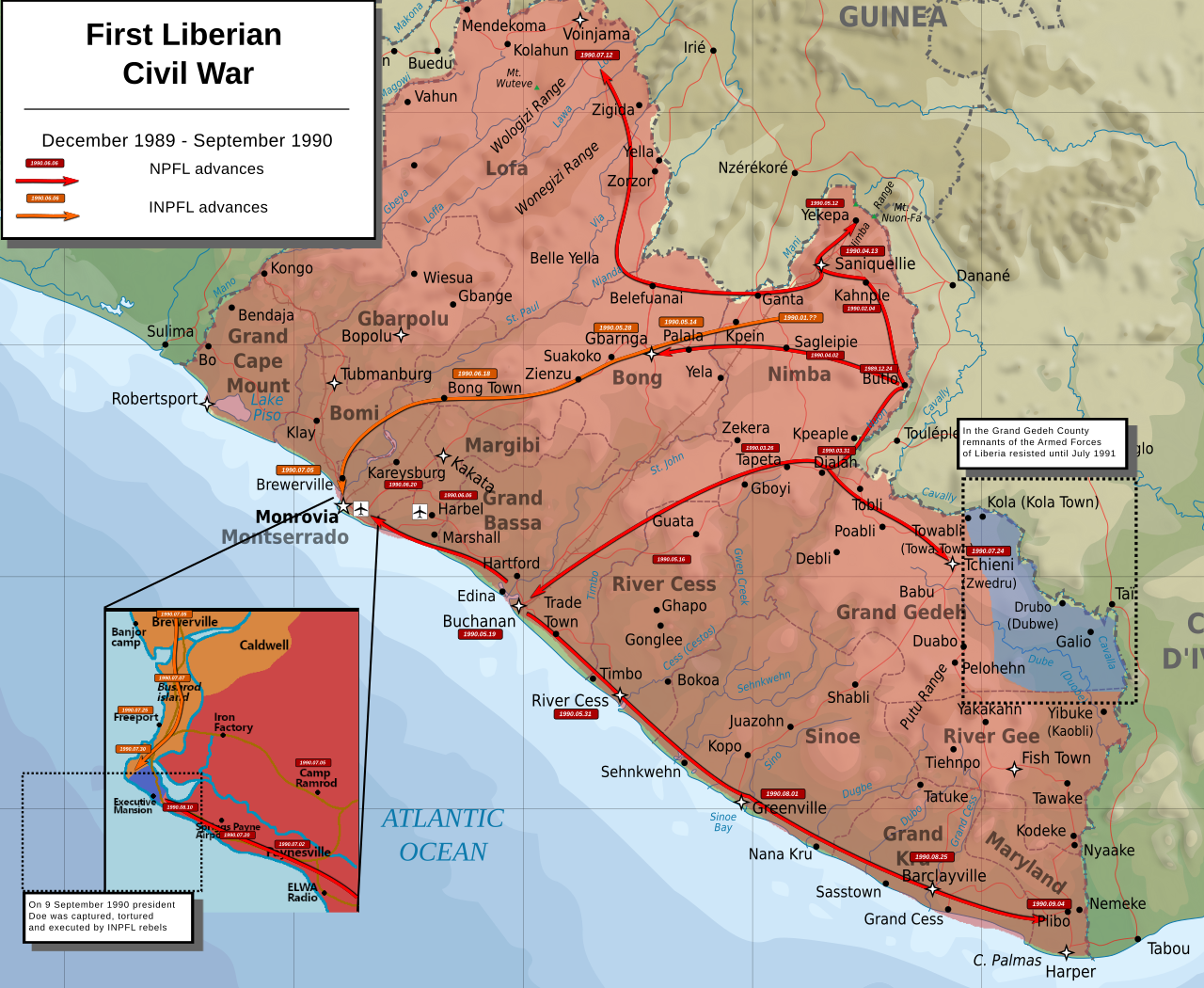
It began when the National Patriotic Front of Liberia (NPFL), led by Charles Taylor, invaded from Ivory Coast to overthrow President Samuel Doe, whose regime of totalitarianism and corruption had led to widespread opposition.
- location
- Liberia
- belligerents
- NPFL, INPFL, AFL, ULIMO
Lore & Background
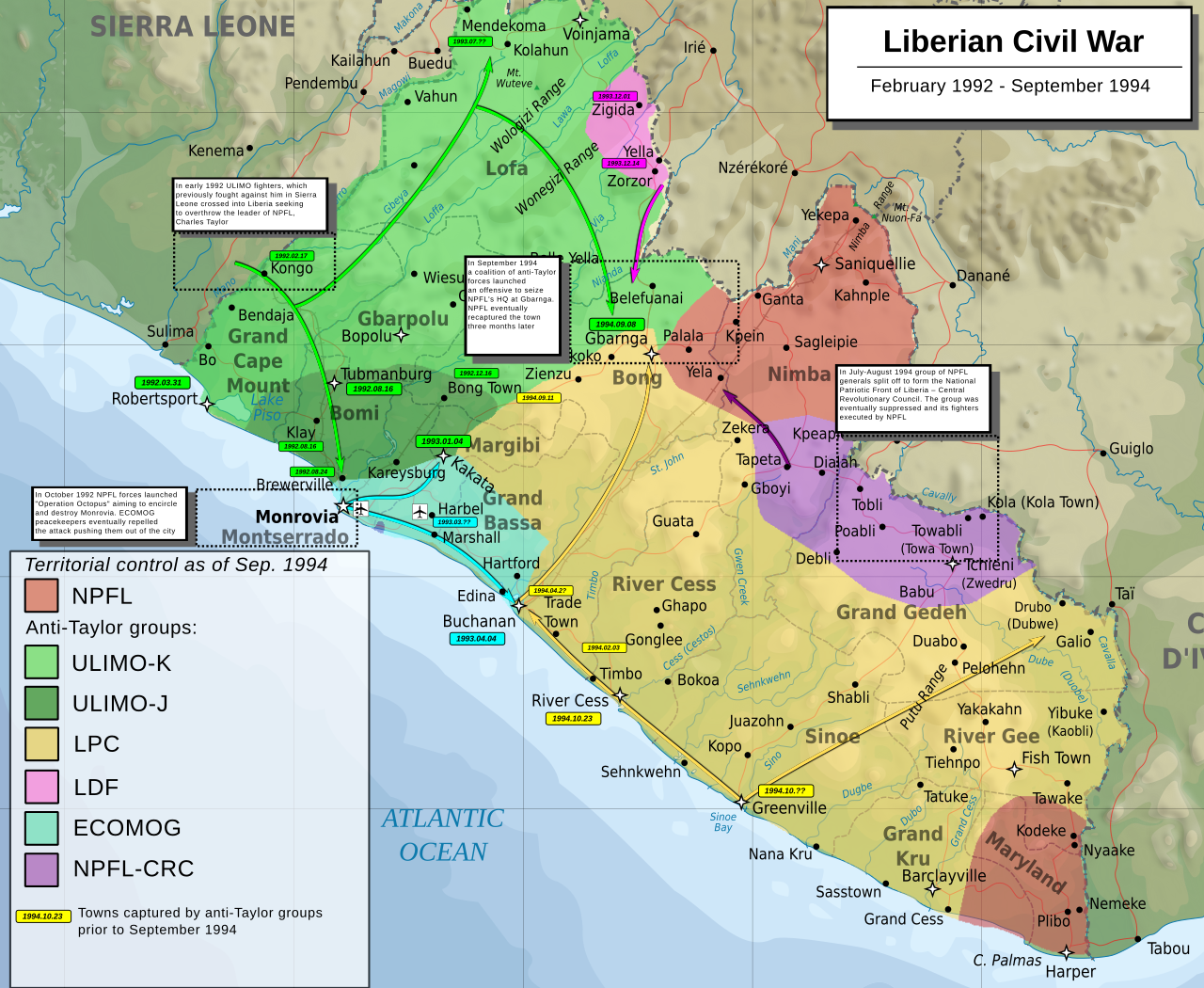
The war was triggered by Samuel Doe's totalitarian rule and corruption, which led to calls for withdrawal of US support by the late 1980s. The NPFL and INPFL then fought each other for control of Monrovia, along with the Armed Forces of Liberia and pro-Doe forces.
Reader's Guide
The war highlighted the devastating effects of ethnic conflict and the failure of international intervention to establish lasting stability.
Taylor's Rise and the Seeds of Renewed War
His dominance rested on media control, widespread fear of renewed fighting, and a population still unfamiliar with democratic norms. Once in office, Taylor built a totalitarian and corrupt state, pushing political opponents into exile in neighboring Guinea and Sierra Leone. His ambition to project regional power saw him bankroll the Revolutionary United Front in Sierra Leone and rebel factions in Guinea. In retaliation, those governments sheltered anti-Taylor dissidents. The repression that followed drove more opponents abroad, where they began reorganizing into the rebel coalitions that would ignite the next war.
The Forging of LURD and a Three-Way Conflict
Guinea became the primary source of military and financial backing for these fighters. The ranks were thought to consist largely of Mandinka and Krahn fighters drawn from the former ULIMO-J and ULIMO-K factions. A critical alliance, brokered by Nigerian chief General Maxwell Khobe, linked the Liberian dissidents with the Sierra Leonean Kamajors hunter militia, including chiefs Samuel Hinga Norman and Eddie Massally. Taylor responded by deploying irregular ex-NPFL fighters alongside his more privileged units, such as the Anti-Terrorist Unit, positioned to ensure the irregulars actually engaged the enemy. The conflict quickly expanded into a complex three-way war involving Sierra Leone and Guinea, with Taylor supporting opposition factions in both countries while those governments armed LURD.
The Squeeze on Monrovia and Taylor's Collapse
LURD's advance was methodical. The ICG report noted the attack pursued a strategy of infiltration through the thick bush of Southern Lofa, looping around government positions. International pressure mounted as well: British and American governments, alarmed by Taylor's support for the RUF, pushed for sanctions, and a weakened version was imposed by the U.N. A week later, the warring parties signed the Accra Comprehensive Peace Agreement, marking the political end of the conflict.
Human Toll and the Road to Reconstruction
One of the conflict's most harrowing dimensions was the widespread use of child soldiers by both Taylor's forces and LURD, a practice that left a generation of young Liberians scarred by violence. That election represented a genuine democratic reset, the first free and fair contest in years, and marked the beginning of Liberia's long and still-evolving transition to stable democratic governance. The peace-building process that followed—encompassing reintegration, disarmament, rehabilitation, and demobilization—was the direct response to the failures of the earlier transition that had allowed the second war to erupt in the first place.
Gallery
Frequently Asked Questions
Which factions fought in the First Liberian Civil War?
The main belligerents included the NPFL, the INPFL, the AFL, and ULIMO, all vying for control over Liberia. Their competing armies turned the country into a multi-front battlefield throughout the conflict.
More in Military Conflicts And Wars 1-18
Spotted an error? Know more?
This is a living reference — every entry is fact-audited, and reader corrections feed straight into our audit queue. Suggest an edit · See this site's audit record